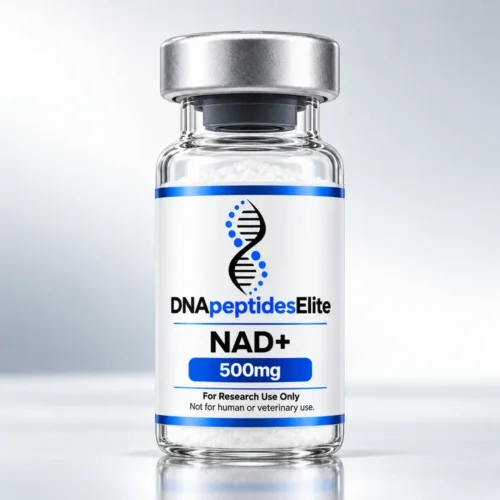
NAD+ 500mg
$43.00
NAD+ is the oxidized form of the coenzyme nicotinamide adenine dinucleotide, supplied as a dry powder for in vitro laboratory research. Every lot is published with a lot-matched certificate of analysis.
- ≥99% purity by RP-HPLC, identity confirmed by LC-MS
- 500 mg per vial, dry powder and cold-chain packed
- For research use only, not for human or veterinary use
- Research use only Not for human or veterinary use
- COA with every lot Look it up by batch number
- Independently tested HPLC-MS verified, >99% purity
- Restricted sale 21+ qualified researchers only
What is NAD+?
NAD+ is the oxidized form of nicotinamide adenine dinucleotide, the coenzyme that carries electrons in cellular redox reactions. It is supplied as a dry powder for laboratory research, where it is used as a substrate and cofactor in enzyme assays.
NAD+ structure
NAD+ is a dinucleotide: an adenosine nucleotide and a nicotinamide nucleotide joined through a pyrophosphate bridge, molecular formula C21H27N7O14P2, molecular weight 663.43 g/mol. It is not a peptide. Analytically it is identified by mass and by UV: the adenine ring absorbs at 260 nm, while the reduced form, NADH, adds a distinct band at 340 nm, which makes reduction of the material easy to detect. NAD+ is stable in mildly acidic solution and degrades in alkaline solution.
Where this material appears in the literature
NAD+ has a very large biochemical literature. In the laboratory it is used as a cofactor in dehydrogenase assays, as a substrate for sirtuin deacylases and poly(ADP-ribose) polymerases, and in studies of cellular metabolism in vitro. DNApeptidesElite supplies the material for laboratory investigation and makes no claim about what it does in any living subject.
Related material in the catalog
NAD+ is held under Longevity & Cellular. It is the only non-peptide reference material in the catalog; the reference peptides are listed in the full catalog.
Analysis and certification
Every lot is analyzed by an independent laboratory before release, using RP-HPLC for purity and LC-MS for identity confirmation. The certificate of analysis is published against the lot number rather than against the product page, so the document you read is the document for the vial you receive. The lot number printed on the vial label is the link between the two, and every certificate can be found in our COA library.
Purity specification
Lots are released against a ≥99% purity specification, determined by RP-HPLC peak area. A specification is a release threshold, not a description of every lot. The measured figure for the lot you receive is stated on its certificate of analysis and may sit above the specification.
Where a measured figure and the specification differ, the certificate is the record that applies to your material. Analytical figures relate to the lot they are published against and carry no implication of suitability for any purpose beyond laboratory research.
Research use only
DNApeptidesElite supplies this material as a reference standard for laboratory research. It is not supplied for any use in humans or animals, it is not a drug, dietary supplement, food or cosmetic, and nothing on this page describes or implies any such use. Sale is restricted to persons aged 21 or over who are qualified researchers or who purchase on behalf of a research institution, laboratory or business.
| Compound | NAD+ |
|---|---|
| Also known as | Nicotinamide adenine dinucleotide, beta-NAD (oxidized form) |
| Class | Dinucleotide coenzyme |
| Molecular formula | C21H27N7O14P2 |
| Molecular weight | 663.43 g/mol |
| CAS number | 53-84-9 |
| Appearance | White to off white powder, hygroscopic |
| Purity specification | ≥99% |
| Purity method | RP-HPLC |
| Identity method | LC-MS |
| Solubility | Freely soluble in water |
| Labeled quantity | 500 mg per vial |
Characterization. Values above describe the compound as supplied. The figures for the lot you receive, including measured purity, are stated on its certificate of analysis.
How this material is tested
Two separate analyses are carried out on every lot before release, and both appear on the certificate.
- RP-HPLC, for purity. Reversed phase high performance liquid chromatography separates the material by hydrophobicity. The main peak is integrated against total peak area, and that ratio is the purity figure reported on the certificate.
- LC-MS, for identity. Liquid chromatography coupled to mass spectrometry confirms that the mass of the main peak matches the expected mass for the compound, which is what distinguishes the correct compound from a closely related one.
A complete certificate carries the compound name, the lot number, the test date, the method, the measured purity and the name of the laboratory. If any of those is missing, or the lot number on the vial does not match the certificate, contact us before using the material.
Storing NAD+
NAD+ is shipped cold and should be moved into freezer storage on arrival. Store the sealed vial dry at −20°C or below, protected from light. The solid is hygroscopic, so let the vial reach room temperature before opening and reseal it promptly after use.
Preparing stock solutions
Prepare stock solutions in sterile water or a neutral to mildly acidic buffer at a concentration suited to your assay, expressed in mg/mL. Allow the vial to reach room temperature before opening and let the material dissolve without vigorous agitation. NAD+ dissolves readily in water. Avoid alkaline buffers, in which NAD+ degrades, and check stock concentration by absorbance at 260 nm where the exact figure matters.
Solutions are less stable than the dry solid. Prepare close to the point of use, hold at 2 to 8°C for short periods only, and aliquot before freezing so that repeated freeze and thaw cycles are avoided.
On arrival
Check that the vial is intact and sealed, that the compound name and labeled quantity match your order, and that the lot number on the label matches the certificate published for it. If anything does not match, or the packaging has clearly failed in transit, contact us before using the material. Problems visible on arrival should be reported within 7 days so that a carrier claim remains possible.
Handling and disposal
Assess the hazards of this material before handling it and use appropriate controls and protective equipment. It has not been characterized toxicologically and should be treated as potentially hazardous. Anyone handling it should be trained for the work.
Dispose of unused material, vials and packaging lawfully and in line with your institution's waste procedures.
Record keeping
Record the lot number in your notes at the point of first use, alongside the date the vial was opened and the concentration of any stock prepared. Certificates are published against the lot number rather than the product, so the lot number is the only reliable link between your results and the analytical data for the material that produced them. If a question arises about a result months later, that link is what keeps the work auditable.
Where do I find the certificate of analysis for my vial?
Every certificate is published in our COA library against its lot number. Search the lot number printed on your vial label to open the certificate for that exact lot.
What purity does this material meet?
Lots are released against a ≥99% purity specification by RP-HPLC. The measured figure for your lot is stated on its certificate of analysis and may sit above the specification.
Is NAD+ a peptide?
No. It is a dinucleotide coenzyme, supplied alongside our peptides as a reference material. It is tested the same way, by HPLC for purity and LC-MS for identity, and published with a lot-matched certificate.
Why should alkaline buffers be avoided?
NAD+ is stable in mildly acidic to neutral solution but degrades in alkaline conditions. Prepare stock in water or a neutral buffer and make it fresh for assays where concentration matters.
How should the vial be stored when it arrives?
Move the sealed vial into freezer storage at −20°C or below, kept dry and protected from light. Allow it to reach room temperature before opening.
When will my order ship?
In-stock orders placed before 11:00 AM PST are dispatched the same business day, cold-chain packed. Orders over $250 ship free within the US.
Can you advise on use in animals or people?
No. This material is supplied for in vitro laboratory research only. We do not provide guidance on administration, dosing or any use in a living subject.

Looking for something else?
Tell us the compound and quantity you need and we will confirm stock and lead time. Research use only.
Contact Us