

Handling
Storing lyophilized material on arrival
Aug
Lyophilization (freeze-drying) removes water from a peptide so it can be shipped and stored as a stable dry powder. That stability is not unlimited, though. Temperature, light and moisture are the three things most likely to shorten the shelf life of a sealed lot, and how material is handled in the first hour after it arrives matters.
On arrival: check before you store
- Inspect the seal. The cap and crimp should be intact, with no cracks in the glass.
- Look at the cake. A dry, white to off-white powder or cake is normal. A shrunken, glassy or sticky appearance can be a sign of moisture exposure.
- Match the lot. Confirm the lot number on the vial matches the lot on your Certificate of Analysis, and file the COA with your records.
Temperature
Heat speeds up chemical degradation. As a general laboratory practice for sealed lyophilized peptides:
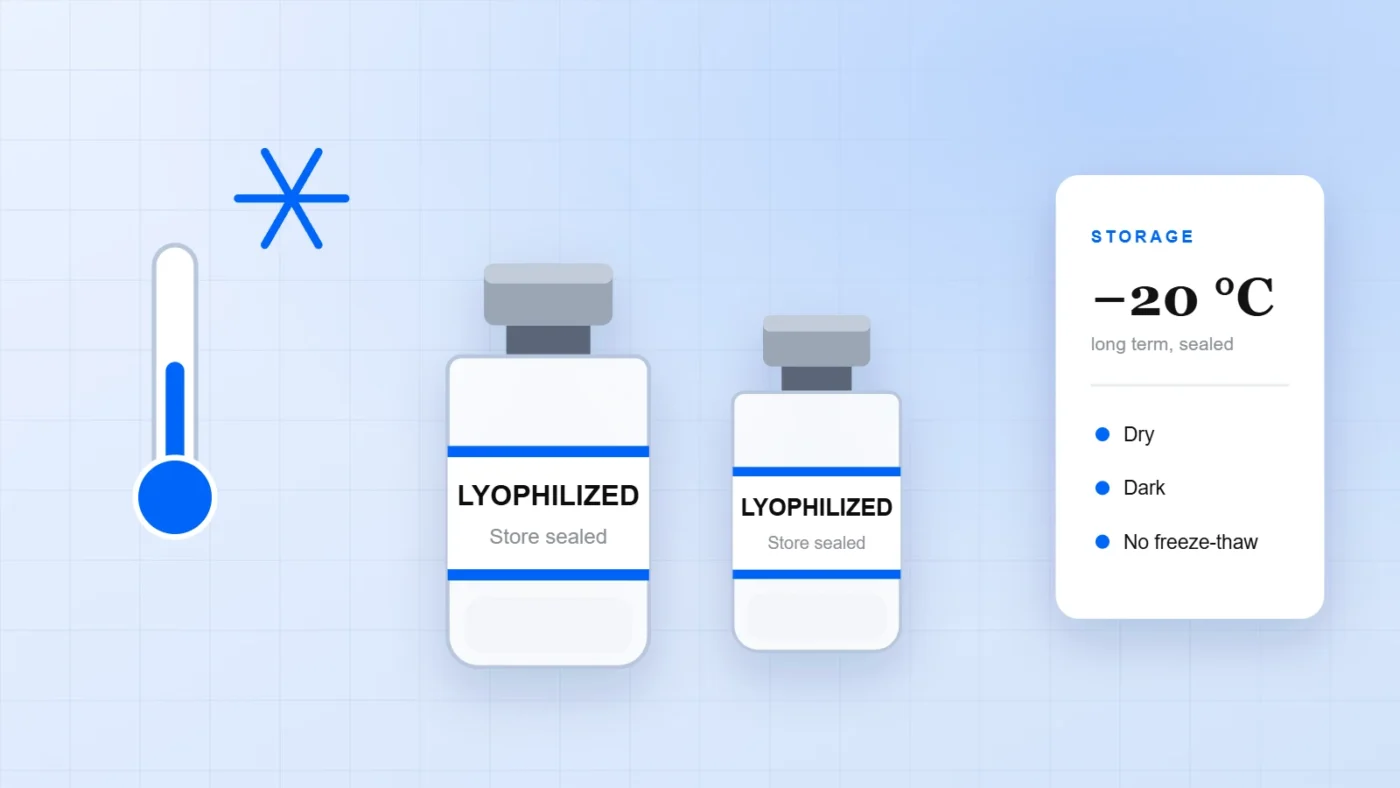
- Long-term storage: −20 °C or colder, in a non-frost-free freezer where possible.
- Short-term storage: 2 to 8 °C is commonly used for material that will be used soon.
- Avoid repeated freeze-thaw cycles. Each cycle can introduce condensation and stress the material. If a lot will be used over time, many labs divide it on receipt.
Always follow the specific storage conditions printed on the product page and COA for each compound, as some materials have different requirements.
Moisture
Lyophilized material is hygroscopic: it will readily absorb water from the air. Moisture is one of the most common causes of degradation in dry peptides.
- Keep vials sealed until they are needed.
- Store them with a desiccant in a closed container.
- Let a cold vial reach room temperature before opening it, so condensation does not form on the powder.
Light
Some amino acid residues are sensitive to light, particularly UV. Keep vials in their outer packaging or in an opaque box, and avoid leaving them on a bench under direct light.
A simple storage routine
- Inspect the seal and cake, then match the lot to the COA
- Log the lot number and date received
- Store sealed, cold, dry and dark
- Warm to room temperature before opening
- Keep freeze-thaw cycles to a minimum
Every DNApeptidesElite lot is lyophilized, sealed and shipped in temperature-stable, discreet packaging, with storage conditions listed on its COA.
All DNApeptidesElite products are supplied for in vitro laboratory research only. They are not drugs, foods, cosmetics or medical devices, and are not for human or veterinary use. This article is educational and is not medical advice or dosing guidance.
